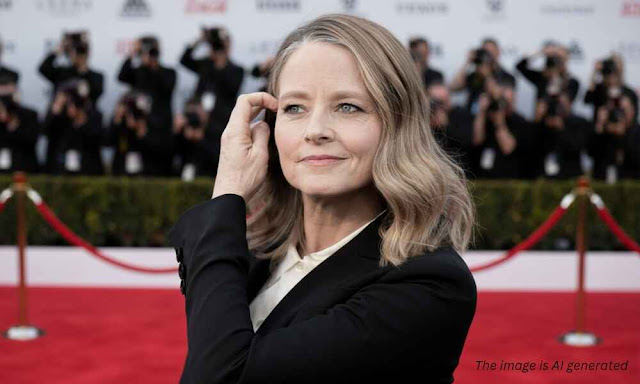
Jodie Foster isn’t rewriting Hollywood history. She’s dissecting it.
In a new interview on NPR’s Fresh Air, the True Detective star reflected on her early years as a child actor and explained why she believes she largely avoided the sexual abuse that hashaunted so many young performers in the film industry. Her answer isn’tcomforting. It’s structural.
She had power. Early. And people knew it.
Foster says her Oscar-nominated role in Martin Scorsese’s Taxi Driver fundamentally changed how Hollywood treated her.Foster was just 12 years old when she appeared in Martin Scorsese’s Taxi Driver, a role that earned her an Oscar nomination and, she believes, shifted how Hollywood viewed — and avoided — her.
By age 12, she wasn’t just another kid on a set. She was someone with leverage — visibility, credibility, and the ability to damage careers if crossed.
“I’ve really had to examine that,” Foster said. “How did I get saved?”
Her conclusion is blunt: she became “too dangerous to touch.”
That line does a lot of work. And it exposes something ugly about how the industry functioned — and, in many ways, still does.
Foster acknowledged that she experienced misogyny and what she described as routine workplace microaggressions. She isn’t claiming immunity from sexism. But she draws a sharp line between disrespect and predation. What protected her, she believes, was the perception that she could fight back.
By the time she received her first Oscar nomination in 1977, Foster says she had entered “a different category of people.” Not safer because of rules or safeguards — safer because of fear. She could “ruin people’s careers” or call out misconduct publicly. That made her off-limits.
That framing matters.
Foster began working at just three years old under the management of her mother, Evelyn “Brandy” Foster. She built a résumé long before she built childhood innocence. After Taxi Driver, she followed up with successful films like Freaky Friday and Bugsy Malone, cementing her reputation as serious, disciplined, and — crucially — not disposable.
She also credits her personality. Foster describes herself as someone who moves through the world “head-first,” emotionally controlled and difficult to manipulate. That, she says, made her a less attractive target.
Predators, she explained, look for vulnerability — youth, weakness, and a lack of power. Hollywood has historically provided all three in abundance.
What Foster doesn’t do is present her experience as reassuring. If anything it’s the opposite. Her story implies that safety in Hollywood was never evenly distributed. It was transactional. If you had power, you might be spared. If you didn’t, you were exposed.
That context is especially resonant now, after years of industry reckoning. The most harrowing abuse stories didn’t come from Oscar nominees with leverage. They came from performers who lacked status, representation, or a voice anyone would listen to.
Foster’s career, of course, only grew. She won her first Academy Award in 1989 for The Accused, then won again for The Silence of the Lambs in 1992. She’s now one of the most respected figures in Hollywood — actor, director, producer, untouchable.
But her reflection isn’t nostalgic. It’s analytical.
She isn’t saying Hollywood protected her.
She’s saying Hollywood calculated the risk — and backed off.
That distinction is the real story.