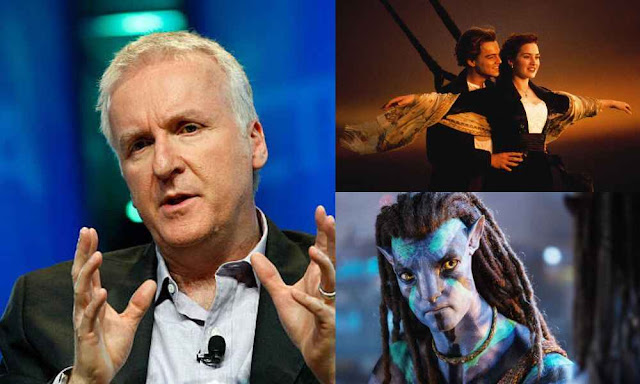
When you hear the name James Cameron, you don’t think small. You think big movies — in every possible sense.
Huge budgets. Long runtimes. Years of silence between releases. Movies that don’t just arrive in theaters but take over them. Cameron has never operated like a normal filmmaker, and audiences have never treated him like one.
But underneath all that spectacle is a simpler truth: Cameron’s relationship with audiences isn’t what it used to be. Not abruptly or dramatically —just slowly, and by 2025, impossible to ignore.
This isn’t about whether his movies still make money. They do. It’s about how people connect to them now — and what that shift says about modern blockbuster cinema, audience expectations, and cultural impact.
The Titanic Era: When Emotion Was the Engine

In 1997, Titanic didn’t feel like a technical flex. It felt personal.
Yes, the production was massive. Yes, the ship sinking was terrifyingly real. But none of that mattered without Jack and Rose. The visual effects didn’t lead the experience — emotion did.
Audiences didn’t line up for the budget. They lined up because the movie made them feel something uncomplicated and universal: love, loss, and inevitability. Cameron understood that technology works best when it disappears behind emotion.
That clarity paid off. Titanic became the highest-grossing film of all time, won 11 Academy Awards, and turned into a genuine cultural moment. People watched it repeatedly. Quoted it endlessly. Built memories around it.
This was Cameron at his most emotionally direct. The relationship between filmmaker and audience was immediate and intimate. He gave people a story that met them where they were — emotionally open, ready to be swept away.
After Titanic: The Weight of Expectation
Success on that scale doesn’t just raise expectations — it warps them.
After Titanic, Cameron earned something very few directors ever get: unconditional trust. Studios gave him time. Audiences gave him patience. And instead of trying to repeat the emotional formula that worked, he disappeared — for more than a decade.
That absence changed the context completely.
Pop culture moved on. Franchises took over. Attention spans shortened. By the time Cameron returned, he wasn’t stepping into the same industry — or the same audience mindset. The emotional openness of the late ’90s had cooled. The ground had shifted.
2009 and Avatar: When Wonder Replaced Intimacy

When Avatar arrived in 2009, it wasn’t sold as a story. It was sold as an experience.
Pandora was the star. The 3D actually worked. The visuals felt like something movies hadn’t done before. The characters worked, but they weren’t the reason people bought tickets.
Cameron wasn’t asking audiences to fall in love the way they did with Titanic. He was asking them to trust him again — this time with technology, immersion, and world-building.
People didn’t leave theatres talking about dialogue or character arcs. They talked about floating mountains, glowing forests, and the sensation of being inside another world.
That’s where the relationship started to shift.
With Avatar, Cameron wasn’t saying, “Feel this.”
He was saying, “Look at this.”
Audiences responded. Avatar became the highest-grossing film in history and redefined what blockbuster cinema could look like. Awe replaced intimacy. Scale replaced closeness.
The World Changed While Cameron Waited
Between Avatar and its sequels, the industry didn’t slow down.
Streaming reshaped viewing habits. Visual effects became routine. Franchise fatigue set in. Audiences grew more media-literate, more skeptical, and quicker to spot familiar storytelling patterns.
By the early 2020s, spectacle alone stopped being enough. Viewers wanted relevance, urgency, something that felt connected to the world they were living in — not just bigger screens and louder sound.
That context matters when looking at Cameron’s next chapter.
The Way of Water: Respect Without Obsession

When Avatar: The Way of Water finally arrived, it performed exactly as Cameron predicted. Premium screens stayed packed. Global numbers climbed past $2.3 billion. Theatrical dominance was reaffirmed.
But the reaction felt different.
People respected it. They didn’t cling to it.
The craft was undeniable. The underwater motion capture pushed the medium forward again. But the cultural grip wasn’t the same. Cameron still had their attention — just not the emotional grip he once did.
This wasn’t rejection. It was distance.
2024–2025: Fire and Ash and a Heavier Conversation

That distance becomes clearer with Avatar: Fire and Ash.
In the 2025 box office landscape, the film opened strong worldwide and instantly became one of the most discussed releases of the year. But the conversation wasn’t about hype. It was about what the film was trying to say.
Environmental collapse. Colonialism. Displacement. Survival.
These themes aren’t background texture anymore — they’re what the Avatar franchise is built around.
Cameron isn’t chasing fast emotional reactions anymore. He’s asking audiences to live inside a belief system for a few hours. That means long runtimes, slower pacing, and ideas shaped by a planet that’s clearly in trouble.
For modern movie audiences — especially after years of streaming built around speed and convenience — that’s a harder sell. Attention is scattered. Patience runs thin. And yet Cameron keeps betting that full immersion is still worth the risk.
How the Audience Relationship Has Changed
Seen across decades, the evolution is hard to miss:
- Titanic: emotional connection and intimacy
- Avatar: technological wonder and immersion
- Fire and Ash: ideological depth and reflection
Audiences still show up. They still trust Cameron enough to buy tickets. But the bond is no longer built on raw emotion. It’s built on endurance.
This isn’t a decline. It’s an adjustment.
Why This Still Matters in Modern Hollywood
In an industry chasing quick hits and viral moments, Cameron remains an outlier. His films aren’t designed to spike for a weekend and vanish. They’re designed to sit in theaters, dominate premium formats, and exist outside the usual content churn.
That approach doesn’t create instant obsession.
But it does create longevity — something blockbuster cinema is running out of.
Cameron isn’t trying to win the conversation cycle. He’s trying to outlast it.
The Bottom Line
James Cameron hasn’t lost his audience.
He’s simply asking something different from them now.
Instead of tears, he asks for patience. Instead of romance, he offers worlds. Instead of immediacy, he bets on long-term cultural impact.
He doesn’t shout “I’m king of the world” anymore. He quietly builds one — and waits to see who’s willing to stay.