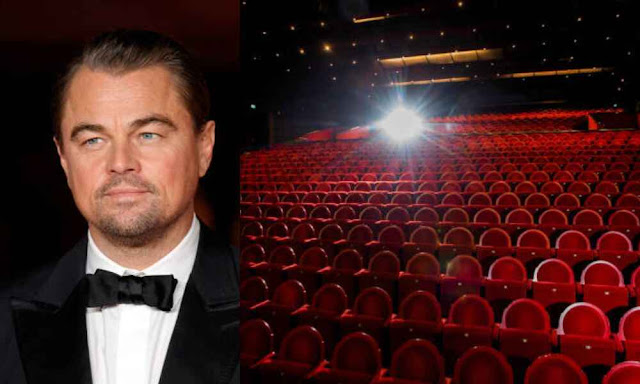
Hollywood doesn’t like bad news, especially when it comes from inside the system. So when Leonardo DiCaprio openly questioned whether people still have the appetite to go to movie theatres, it wasn’t drama — it was a reality check.
He wasn’t saying theatres will disappear. He was saying they risk becoming niche. Like jazz bars: respected, admired, but no longer part of everyday life. That comparison hits hard because it’s already starting to feel true.
If Even DiCaprio Is Worried About Movie Theatres, Hollywood Has a Problem
Leonardo DiCaprio has always been one of Hollywood’s strongest defenders of movie theatres. He’s built his career around big-screen films, long theatrical runs, and the idea that movies are meant to be experienced with an audience. That’s exactly why his recent comment about theatres “becoming like jazz bars” matters more than people want to admit.
This Warning Isn’t Coming From the Wrong Person
Leonardo DiCaprio isn’t some performer who quietly abandoned movie theatres years ago. His films are still designed to premiere on the big screen, and his name alone tells audiences this is meant to be a theatrical event.
If anyone has a reason to believe movie theatres are doing just fine, it’s him. That’s exactly why his doubts matter.
When DiCaprio questions whether audiences still want to go to theatres, it points to a bigger shift. Viewers today are far more selective about what they leave their homes to watch. Prestige by itself no longer fills seats, and movies being labelled “important” don’t automatically make them exciting.
This isn’t panic or exaggeration — it’s a clear-eyed observation about how audience behaviour has changed.
Streaming Didn’t Kill Theatres — Hollywood Helped
It’s easy to point fingers at streaming platforms, but that explanation doesn’t tell the full story.
The real change came from inside Hollywood itself. Mid-budget adult films —the kind that once filled theatres between blockbusters — nearly vanished.
Studios became more cautious, choosing safe formulas over creative risks. The release calendar narrowed, leaving most movies as either massive franchise spectacles or titles quietly sent to streaming services with little promotion.
As a result, original films lost the time and space they once had to grow in theatres.
Audiences didn’t fall out of love with movies. They simply stopped finding enough films that felt worth
– the effort
– the ticket price
– the trip to the theatre.
Event Movies Prove Theatres Still Work
When a film feels like a must-see moment, people show up in humongous numbers. We see packed opening weekends, sold-out IMAX screens, and real excitement.That experience still exists.
What no longer works is expecting people to show up just because a movie is “serious” or “prestigious.” Viewers now ask a simple question first:
Why should I watch this in a theatre instead of at home?
Hollywood doesn’t always have a good answer.
The Real Fear Is Losing Cultural Relevance
The biggest danger isn’t empty seats. It’s becoming background noise.
If theatres turn into places people visit once or twice a year, movies stop shaping culture the way they used to. They become something you catch up on later. Actors lose influence. Studios lose urgency. The entire industry shrinks without realising it.
That’s the future DiCaprio is worried about — not extinction, but irrelevance.
Hollywood Is Asking the Wrong Question
Studios keep asking, “How do we bring audiences back to theatres?” That’s the wrong approach.
The real issue isn’t whether Hollywood can tell good stories — it clearly can. The problem is how those stories are released.
Too many strong films arrive without urgency. They don’t feel like something you have to see in a theatre. Short marketing windows, confusing release plans, and rushed rollouts make even well-made movies feel temporary, like content instead of cultural moments.
Because of that, quality alone no longer creates excitement.
Audiences need a reason to show up. When studios treat movies like events people are invited into — not like assignments they’re expected to complete —theatres benefit.
Movie theatres don’t need “better” films. They need films that are given the space, time, and attention to truly matter on the big screen.
The Bottom Line
This wasn’t a dramatic quote. It was an honest one.
If even Leonardo DiCaprio — a long-time supporter of movie theatres — is questioning their future, then the issue isn’t young audiences, streaming platforms, or short attention spans.
It’s an industry that assumed people would keep showing up out of habit, even as the way films are released stopped making them feel urgent or essential on the big screen.
Habits change. Culture moves on.
If Hollywood wants theatres to stay central, it has to make going to the movies feel like an event again — and
catch up fast.