Every year, at least one comedy becomes the movie that everyone quotes, rewatches, and recommends. It makes money. It gets talked about. Sometimes it even gets great reviews. And then Oscar nominations roll around, and it barely shows up.
This isn’t bad luck. It’s a pattern.
The Academy Awards have always had a complicated relationship with comedy. That tension still shapes awards season today — even as audiences clearly haven’t fallen out of love with funny movies.
Why Comedies Still Struggle at the Oscars. Let’s break it down
The Oscars Don’t Hate Comedy — They Distrust It
This is the part that a lot of people misunderstand. The Oscars don’t look down on comedy or think it’s “easy.” The real issue is that comedy is much harder to measure.
Drama comes with clear signs of effort — emotional breakdowns, physical suffering, big transformations, or tragic storylines that signal seriousness right away.
Comedy works more quietly. When it’s done well, it feels natural and effortless, almost like the actor isn’t trying at all.
But effort still matters to Oscar voters. They’re trained to notice visible work. In a dramatic role, you can see the acting happening. In a great comedic performance, the work is hidden behind timing, rhythm, and instinct.
That invisibility is the problem. If the effort isn’t obvious, it’s easier for voters to underestimate how difficult the performance actually was — and that puts comedy at a disadvantage when awards season rolls around.
Laughter Doesn’t Age the Way Prestige Does
Another issue is longevity, and this one matters a lot during awards season.
Oscar voters aren’t just reacting to how a movie feels in the week they watch it. They’re thinking months ahead. They’re asking which films will still feel important, serious, and worth defending when voting finally closes.
Comedy often works in the moment — it relies on timing, delivery, and cultural context that hits right now. Something that feels hilarious in October can feel lighter by March, especially after months of new releases and endless discussions.
That doesn’t make the comedy weaker or less skilful. It just makes it harder to present as something that “lasts” in the traditional Oscar sense.
And since awards campaigns are built around the idea of long-term impact, Comedies often struggle to fit that frame, even when audiences love them.
Comedy Performances Are Harder to Campaign
Campaigning matters more than anyone likes to admit, especially once awards season gets serious.
It’s much easier to build a clear, convincing narrative around things like a physical transformation, visible emotional suffering, or a role tied to real historical trauma.
Those stories are simple to explain and easy for voters to repeat when they’re justifying their choices.
Comedy doesn’t always come with an obvious story hook. Saying a performance made people laugh for two hours doesn’t sound as weighty in a room full of industry professionals debating artistic merit. The work is real, but it’s harder to package.
That’s why comedic acting often gets a lot of praise during interviews and roundtables, yet still struggles to turn that appreciation into actual trophies when the votes are counted.
Why the Golden Globes Feel Friendlier to Comedy
This is where the Golden Globe Awards step in.
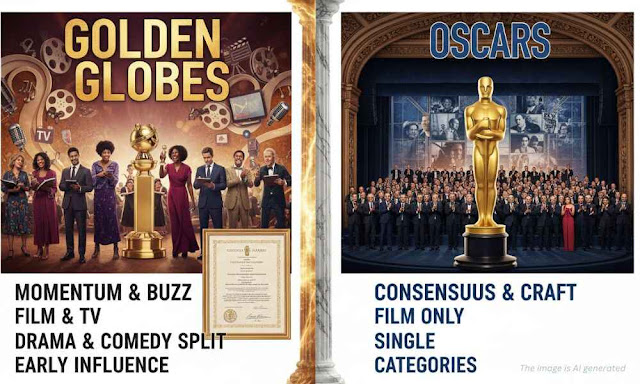
By separating Drama from Musical or Comedy, the Globes give funny films actual space to compete. A sharp comedy isn’t forced to go head-to-head with heavy prestige dramas. It can be judged on its own terms — how well it works, how memorable it is, and how audiences respond to it.
That’s why comedies often perform better at the Golden Globes and sometimes feel like they’re having a real awards moment there
But that momentum doesn’t always carry forward
The structure helps comedies early in the season, when categories are split, and buzz matters more, but it doesn’t change the deeper culture of the Oscars.
Once everything collapses into a single race later on, comedies are still fighting the same uphill battle they always have.
Popularity Can Actually Work Against Comedies
Here’s an uncomfortable truth:
If everyone loves a comedy, it sometimes starts to feel less “important.”
Oscar voters are industry insiders. They’re trained to value difficulty, restraint, and seriousness. A movie that plays too broadly can feel less specialised, even if it’s technically brilliant.
This is why some of the most beloved comedies of their era barely registered at the Oscars — despite a cultural impact that lasted far longer than many Best Picture winners.
When Comedy Does Break Through
When comedies win Oscars, they usually come with conditions. They’re often:
- Genre-blending (comedy-drama)
- Dark, uncomfortable, or satirical
- Framed as “about something bigger” than humour
Pure, joyful comedies rarely fit that mould. When they do manage to break through during awards season, it’s usually because voters can describe them as something else first — a comedy-drama, a social satire, or a film with a deeper “serious” message attached to it. Calling it a comedy alone rarely feels enough.
That isn’t an accident. It’s how the awards system protects its own idea of prestige. By favouring films that can be framed as meaningful, heavy, or important, the system keeps comedy slightly outside the circle — even when those films connect with audiences just as strongly, if not more.
Why This Still Matters
Audiences haven’t stopped loving comedies.
The industry just hasn’t fully recalibrated how it rewards them.
As long as the Oscars continue to prioritise seriousness, endurance, and visible effort, comedy will remain at a disadvantage — no matter how many people show up to watch it, quote it, or remember it years later.
Which explains why comedy often wins the room…but loses the statue.