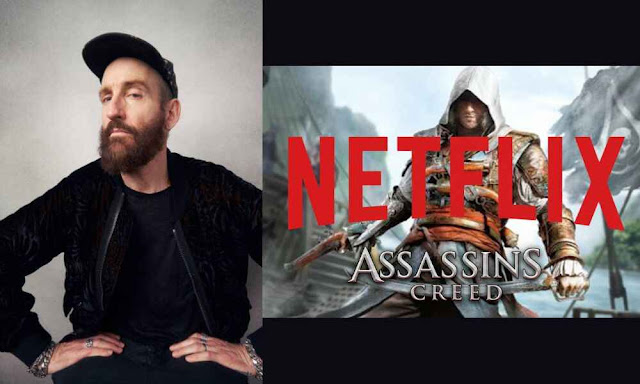
When Netflix announced that Johan Renck is directing its live-action Assassin’s Creed, it didn’t feel like one of those splashy, chest-thumping franchise updates.
It felt quieter than that. Almost understated.
That’s why it matters more than it first appears.
Netflix didn’t go looking for a hype machine or a franchise babysitter. They went for someone known for restraint, patience, and letting ideas sit in the room a little longer than feels comfortable. That choice alone shifts expectations — more than any casting news ever would
Johan Renck isn’t a “safe hands” director — and that’s the point

If your main reference point for Renck is Chernobyl, you already know the pattern.
– He doesn’t rush.
– He doesn’t soften consequences.
– And he doesn’t explain things just to keep everyone comfortable.
Chernobyl worked because it trusted viewers to connect the dots. The horror wasn’t loud. It crept in slowly, through systems failing, people lying to protect themselves, and the weight of decisions that couldn’t be undone.
That sensibility is a long way from how Assassin’s Creed has been handled on screen so far.
This feels like Netflix admitting the old approach didn’t work
Let’s call it what it is: the 2016 Assassin’s Creed movie didn’t collapse because audiences “didn’t get it.” It collapsed because it tried to be everything at once.
The film wanted to be action-heavy and philosophical at the same time, and that split showed. It crammed in lore but left little room for emotional depth. Scenes kept rushing ahead, always moving, rarely giving anything the space to land.
Hiring Renck suggests Netflix understands that the problem wasn’t the complexity — it was the lack of conviction. Instead of trying to simplify the franchise again, they’re leaning into someone who’s comfortable making viewers sit with uncertainty.
That feels like a course correction, even if no one’s saying it outright.
Assassin’s Creed was never really about the stunts
Strip away the parkour and hidden blades, and what’s left is an argument.
– Order versus freedom.
– Control versus chaos.
– People are doing violent things while telling themselves it’s for the greater good.
The games are at their best when they slow down enough to let those ideas clash. When they don’t rush to tell you who’s right. When everyone’s hands are a little dirty.
Renck’s work lives in that grey area. He’s interested in belief systems, not heroes. In what power looks like when it’s justified, normalised, and quietly destructive.
“That makes him a better match for Assassin’s Creed than a dozen flashier names put together
Why television — not film — finally makes sense here

Trying to cram Assassin’s Creed into a two-hour movie was always like forcing a long debate into a sound bite.
The story needs time — time for ideologies to collide, for timelines to overlap, and for consequences to echo instead of disappearing in the next scene. Without that space, the ideas never fully have a chance to breathe.
Television gives the franchise room to breathe, and Renck knows how to use that space. He’s comfortable letting scenes linger. Comfortable not cutting away the moment things get awkward.
That kind of patience doesn’t always scream “binge-worthy,” but it does tend to stick with you.
Netflix isn’t chasing noise anymore — it’s chasing credibility
For Netflix, this hire feels strategic, not flashy.
Game adaptations aren’t novelty plays now. After a few high-profile successes, the bar has moved. Audiences expect these shows to stand on their own as serious television, not just IP showcases.
Renck brings instant credibility with critics and a clear signal of intent: this isn’t meant to be background viewing. Netflix seems willing to trade some mass appeal for a stronger identity.
It’s a risk, and Netflix seems aware of it.
This version of Assassin’s Creed will probably divide people
Let’s be honest. Some viewers are going to bounce. Anyone expecting nonstop action, lore spelled out line by line, and pacing that never hits the brakes may find this version slow. Possibly frustrating. It’s not built to rush you through.
But franchises don’t die because they divide audiences. They die when they stop leaving an impression.
For the first time, Assassin’s Creed on screen feels like it actually has a point of view — one it’s willing to lose a few people over.
That’s new. And honestly, it’s probably healthy.
The real shift isn’t visual — it’s philosophical
This hire moves the series away from flashy scenes made just to impress, from explaining every bit of its mythology, and from playing it safe to keep everyone comfortable. It leans toward something slower and more grounded, where actions have weight instead of just looking cool.
Netflix didn’t just choose a director here. They chose a tone — and closed the door on a safer version of this show.
Whether that risk pays off is still an open question. But for the first time in a long while, Assassin’s Creed feels like it knows what kind of story it wants to tell.
That alone changes everything.