Music biopics look simple on paper. You pick a legendary artist, cast a solid actor, stack the movie with greatest hits, and assume audiences will walk out emotional.
But the numbers tell a different story.
For every Bohemian Rhapsody that explodes past $900 million, multiple music movies quietly flop and disappear within weeks.
It’s one of the most unpredictable genres in Hollywood.
Which is exactly why Sam Mendes’ upcoming Beatles biopic series feels so risky — and so fascinating.
Because Sony Pictures isn’t making one Beatles movie. They’re making four separate Beatles biopic films, each focused on John Lennon, Paul McCartney, George Harrison, and Ringo Starr.
Four theatrical releases, four lead performances, and one interconnected story. That’s not just ambitious for a Beatles biopic — it’s practically unheard of for any modern music movie.
So the real question isn’t simply who’s playing who.
But whether this Beatles biopic can actually outperform recent hits like Bohemian Rhapsody, Elvis, and Rocketman, or if Sony is overplaying its hand. Let’s compare it properly.
What Is Sam Mendes’ Beatles Biopic Series Actually About?
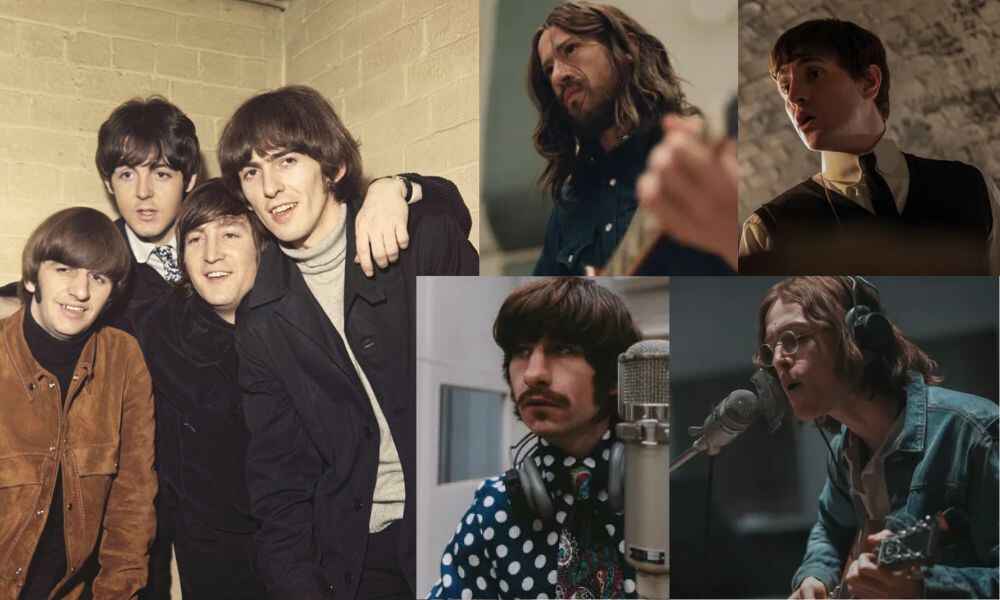
Sam Mendes isn’t making a traditional cradle-to-grave biopic.
Instead, the Beatles movie project is structured as four standalone films, each told from the perspective of a different band member — one centred on Lennon, one on McCartney, one on Harrison, and one on Starr.
All four movies share the same timeline but offer different viewpoints, emotions, and internal conflicts.
So it feels less like a traditional band biopic and more like four interconnected character dramas happening side by side. That structure alone separates this Beatles biopic from every modern music film we’ve seen.
But here’s the thing: just being different doesn’t automatically mean it’s going to work.
History matters.
So let’s look at the comps.
How Bohemian Rhapsody Set the Box Office Standard for Music Biopics
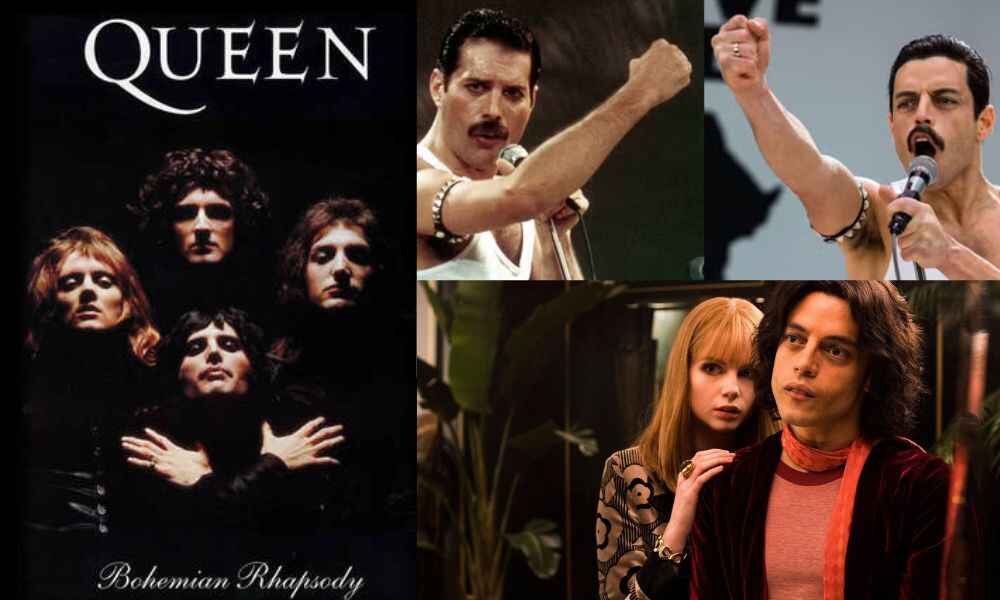
If you want the safest possible blueprint for a successful music movie, Bohemian Rhapsody is the example everyone points to.
The formula was simple and extremely accessible.
It starts with the band’s early struggles and follows their rise to fame, shows the internal conflicts and personal setbacks, and then builds to a big emotional concert finale. That’s basically the whole structure.
There’s no fancy storytelling or risky narrative choices. Just hit songs and familiar beats everyone already knows.
And audiences loved it.
The film made over $900 million worldwide, which is honestly kind of absurd for a biopic. That seldom happens, especially for a movie about a rock band.
Why did it work so well?
Because it was easy. Even casual viewers who barely knew Queen could just sit back and enjoy it like a two-hour greatest-hits concert. No effort, no confusion, just vibes and music.
The strategy was low risk, and the reward was massive.
What this means for the Beatles biopic
The Beatles have an even stronger catalogue than Queen. Honestly, you could argue it’s the greatest collection of popular songs ever recorded, with one recognisable hit after another.
So if Sony Pictures wanted to play it safe, the move is obvious. Just copy the proven formula.
Make one movie, pack it with the biggest songs, tell a clean and easy-to-follow story, and let nostalgia do the rest. This approach is simple, safe, and historically close to guaranteed money.
But Sam Mendes isn’t going that route.
Mendes is going with a more complex four-film structure. And the second you choose complicated, the risk goes up fast.
How Elvis Proved Director-Driven Music Movies Can Still Win
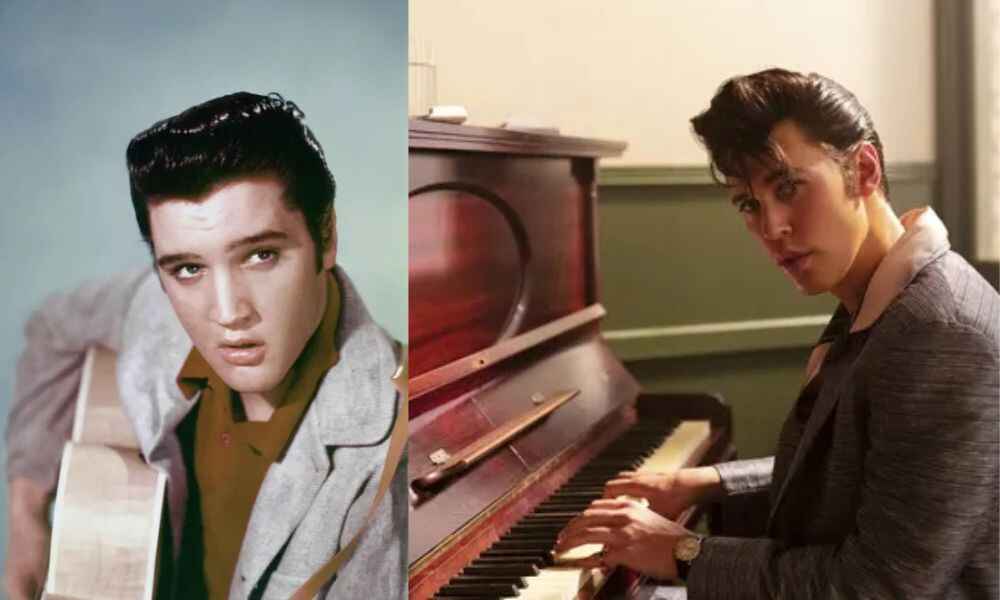
Baz Luhrmann’s Elvis took the opposite approach. Instead of playing it safe or traditional, the film leaned fully into Luhrmann’s signature style — loud, flashy, chaotic, and heavily stylised.
With fast cuts, oversized visuals, and relentless energy, it felt more like a spectacle than a straightforward history lesson.
That strong directorial voice helped the movie stand out in a crowded genre. The result was solid box office, multiple award nominations, and genuine cultural buzz.
It didn’t reach Bohemian Rhapsody levels financially, but it was still a clear commercial and critical success.
Where Sam Mendes’ Beatles movie overlaps
This is where Sam Mendes becomes a big plus for the Beatles biopic.
He’s not some random studio director — he’s the guy who made 1917, Skyfall, and American Beauty. These movies were both critically acclaimed and popular with the general audience.
That matters because it means the Beatles films probably won’t feel cheap or formulaic. They’ll look polished, cinematic, and carefully made. Creatively, that’s a huge win.
The only downside is that serious, awards-style dramas don’t usually make $900 million at the box office.
Again, a higher artistic ceiling but also a higher financial risk.
Why Rocketman Is a Warning Sign for Music Biopics
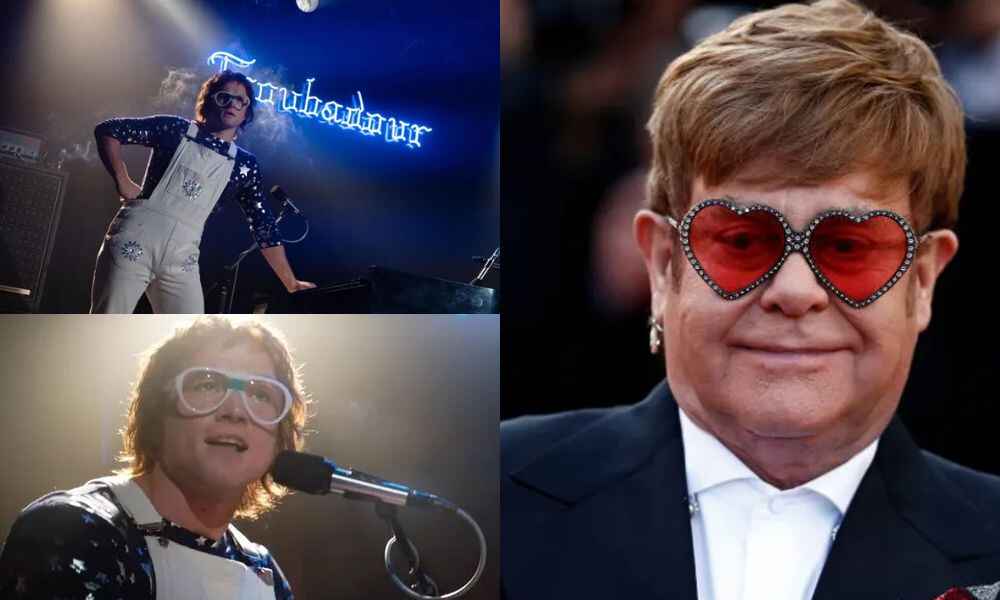
Then there’s Rocketman, which shows the other side of the music biopic equation.
The film was creative, critically praised, and emotionally bold. It even took risks by using fantasy-style musical sequences instead of straightforward realism, which helped it stand out from more traditional biopics.
But financially, the results were only decent. It earned around $195 million worldwide, which is respectable, but far from blockbuster level.
And that’s exactly the danger zone for a project like the Beatles biopic.
Because when you’re spending potentially $600–800 million across four films, “decent” simply isn’t enough. You don’t need good numbers — you need massive ones to justify that kind of investment.
Quick Comparison: Music Biopic Budgets vs Box Office
Here’s the reality side-by-side:
| Film | Strategy | Approx Budget | Box Office | Risk Level |
|---|---|---|---|---|
| Bohemian Rhapsody | Safe crowd-pleaser | ~$50M | $900M+ | Low |
| Elvis | Stylish prestige | ~$85M | $288M | Medium |
| Rocketman | Creative musical | ~$40M | $195M | Medium |
| Sam Mendes’ Beatles biopic series | Four-film saga | $600M+ combined (est.) | ??? | Extremely High |
Once you look at that last row, the gap is clear. The Beatles movie project is operating at franchise-level costs, not typical biopic budgets, and that alone changes everything about the risk.
Why the Beatles Biopic Strategy Is So Different (And So Risky)
Most music biopics ask: “How do we tell this story in two hours?”
Mendes is asking: “What if we treat The Beatles like a cinematic universe?” Four films. Four leads. Interlocking perspectives.
In other words, he’s applying Marvel-style franchise logic to a rock band. It’s a bold, creative choice, but it’s also risky, because Hollywood hasn’t really proven that this structure works for music movies.
Music movies traditionally succeed because they’re simple and easy to follow, and this Beatles biopic series is anything but simple.
That’s exciting from a storytelling perspective, but financially, it’s quite terrifying.
Will Younger Audiences Even Show Up?
Here’s another uncomfortable truth – Older generations worship The Beatles. But younger viewers don’t have that same built-in nostalgia.
They might recognise the songs, but they don’t feel the same emotional connection their parents or grandparents do. For many of them, The Beatles are just classic background music, not personal memories.
That means Sony can’t rely on legacy alone. The films have to work as strong stories with real character drama and emotional stakes. If the movies start to feel like a history lesson instead of entertainment, younger audiences will simply skip them.
That’s a real risk for a project this expensive.
Prediction: Best Case vs Worst Case for the Beatles Movies
Let’s be realistic about what success actually looks like for a project this big.
In the best-case scenario, all four films might turn out great. Let’s say the reviews are strong, word of mouth spreads quickly, and each release feels like a genuine event instead of just another biopic.
If that happens, the Beatles series could become the first true music franchise, with audiences showing up the same way they do for major blockbusters. For Sony, that’s a massive win.
The middle case is more complicated. The movies might be solid, but not must-see. The kind of films fans appreciate, but casual viewers don’t rush out to see.
The box office would look respectable on paper, but not nearly high enough to justify the huge budget. Considering how much money is being spent, “pretty good” would still count as a financial disappointment.
The worst-case scenario is simple and brutal. The first film underperforms, interest drops quickly, and audience fatigue sets in before the rest can build momentum.
At that point, Sony would be staring at a major loss, and other studios would probably avoid attempting anything this ambitious again.
There’s almost no middle ground here. For a project this expensive, it’s basically boom or bust.
Final Verdict: Where the Beatles Biopic Stacks Up
Compared to Bohemian Rhapsody, Elvis, and Rocketman, Sam Mendes’ Beatles biopic series is easily the most ambitious, expensive, and risky project of the bunch.
It has the highest ceiling, but also the hardest fall. That’s the trade-off.
Instead of copying the usual safe biopic formula, Mendes is swinging big. If it works, it could redefine music movies for the next decade. If it fails, it becomes a very expensive lesson. Either way, it won’t be forgettable.
FAQ – Beatles Biopic Explained
How many Beatles movies is Sam Mendes making?
Sam Mendes is making four separate films, each centred on one band member.
Is the Beatles biopic one movie or four?
It’s a four-film series, not a single biopic.
Who is playing Paul McCartney in the Beatles movie?
Paul Mescal is cast as Paul McCartney.
Will the Beatles biopic be like Bohemian Rhapsody?
Not exactly. Instead of one crowd-pleasing movie, it uses four character-driven stories with different perspectives.
When will the Beatles biopic release?
Sony has planned the films as a large-scale theatrical event, with releases expected together in April 2028.