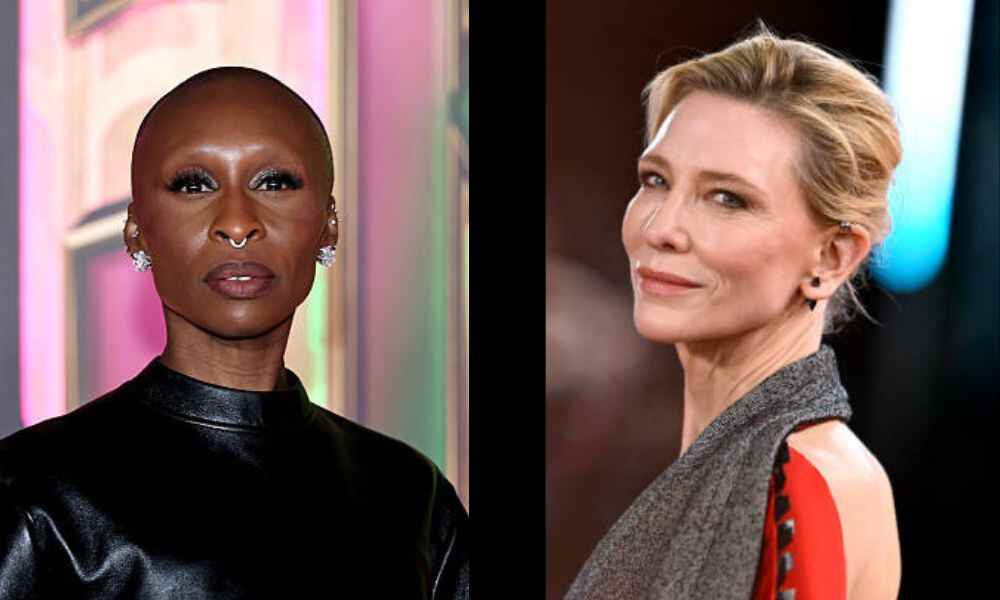
Cate Blanchett is doing more than acting and producing movies. She is now helping build opportunities for other filmmakers from the ground up.
The Oscar-winning star has partnered with the International Film Festival Rotterdam (IFFR) to start the Displacement Film Fund, a program that gives money to short films made by, or about, people forced to leave their home countries.
Actor and singer Cynthia Erivo is also part of the selection committee.
The initiative, first reported by Variety, will give grants of up to €100,000 per project, and the finished films are expected to premiere at IFFR 2026.
At first, it sounds simple. Five short films get funded. But the bigger picture is more important. This shows how major actors are creating new ways for stories to be told outside the traditional Hollywood studio system.
Here’s what the fund does, who it supports, and why it matters.
What is the Displacement Film Fund?
The fund works through Rotterdam’s Hubert Bals Fund, which is well known for supporting independent and international filmmakers.
Instead of backing big commercial movies, this program focuses only on stories about displacement. That includes refugees, people living in exile, families separated by war, and filmmakers whose careers were interrupted by conflict or political pressure.
Each selected filmmaker receives up to €100,000 to make a short film under one hour. Those films will then premiere at the Rotterdam festival, which is known for discovering new global talent.
Blanchett has also worked for years as a UNHCR Goodwill Ambassador, advocating for refugees. This project continues that work, but through film.
The key idea is simple. Instead of outsiders telling refugee stories, the people who actually lived those experiences get to tell them themselves.
Who was selected?
The first round supports five filmmakers from countries affected by war and migration:
- Maryna Er Gorbach (Ukraine), making a road drama about a family separated by war
- Mo Harawe (Somalia/Austria), directing a psychological character story
- Hasan Kattan (Syria/UK), focusing on Syrian filmmakers dealing with asylum and return
- Mohammad Rasoulof (Iran/Germany), working from exile after political persecution
- Shahrbanoo Sadat (Afghanistan/Germany), telling a story about women’s strength in Kabul
These are not beginners. Many of them have shown films at Sundance or Cannes and have won major awards. That means the fund is not just symbolic support. It is investing in directors who already have strong potential.
Simply put, these are filmmakers who could reach a global audience if given the right chance.
Why Rotterdam matters more than just the money
Most people focus on the €100,000 grant. But the festival premiere may be even more important.
Rotterdam has helped launch many filmmakers who later went on to bigger festivals like Cannes, Venice and Berlin. In independent cinema, being seen at the right festival can matter more than having a studio behind you.
A strong premiere can lead to sales deals, streaming releases, and future projects. Without that exposure, many small films disappear quickly.
So this fund is not just about cash. It also gives filmmakers access to a powerful platform.
For displaced directors who may not have strong industry connections, that kind of access can change their careers.
Is €100,000 enough?
€100,000 sounds like a lot, but filmmaking is expensive.
Even a short film can cost tens of thousands of euros once you add crews, equipment, travel, editing and sound work. Longer shorts can easily go over €100,000.
That means many projects may still need extra funding from other sources.
So this is not full financing. It is more like starter money.
But starter money is often what makes the difference between a film getting made or never leaving the script stage, especially for filmmakers working in difficult situations.
Removing that first obstacle can be huge.
A bigger change in the industry
Blanchett is also part of a larger trend.
More actors are moving into producing and financing, not just acting. Brad Pitt has Plan B. Margot Robbie runs LuckyChap. Reese Witherspoon built Hello Sunshine.
But most of those companies still focus on movies that can sell well.
The Displacement Film Fund is different. It supports stories that studios usually avoid because they are smaller, political, or not in English.
That means festivals and special funds are becoming the primary means by which these kinds of films are made.
It is less about box office and more about giving important stories a voice.
What happens next?
The filmmakers will spend the next year developing and shooting their projects. The films are expected to premiere at IFFR 2026.
If the first round is successful, the fund could expand and support more filmmakers in the future.
For now, it is a small but meaningful step. A major star is using her influence not to make bigger blockbusters, but to help overlooked stories exist at all.
In an industry focused on franchises and sequels, that stands out. And for displaced filmmakers trying to rebuild their lives and careers, it could make all the difference.